
News
Direct answer: When a component on a live product goes end-of-life, you have three roads, not one: buy enough of the dying part to finish the product’s life, qualify an alternate part and switch to it, or redesign the board so the part is no longer needed. The right road is decided by the product’s remaining life, not by the size of the last order window. A last-time buy is sized from net lifetime demand — the boards you still have to build, plus the spares you still have to service, minus the stock you already hold — and there is no standard number of months of stock that fits every product. An alternate part is not approved because its datasheet looks similar: it has to prove, against your board’s own requirements, that it works electrically, fits mechanically, survives your process, and is accepted by whoever has to accept it. And sometimes the honest answer is to stop and redesign, because stockpiling a dying part only moves the same problem a few years down the line. This article works through the decision in that order, and it is the planned lifecycle decision — not the mid-batch emergency, which our guide to approving an alternate part mid-batch already covers.
The notice usually arrives as an email, and it rarely looks urgent. A product discontinuance notice, a last-time-buy date a few months away, a list of part numbers, and a line naming a recommended replacement. It is easy to file it and get back to the line. The cost of filing it is that the decision it forces does not get smaller with waiting: the order window closes, the alternate takes longer to qualify than anyone budgeted, and the redesign that would have been cheap while the board was still in production becomes expensive when it has to be done under a deadline. The notice is not a purchasing problem. It is a lifecycle decision, and the international standard on the subject, IEC 62402, treats obsolescence management as a process that runs across the whole life of an item, not as an emergency purchase. This article follows that shape: read the notice, find everywhere the part lives, size the three roads, and decide while the window is still open.
Three boundaries first, so the rest of the article is read correctly. First, this article names no real component as end-of-life and presents no alternate part as already approved for any customer’s board: every part number in the examples is invented, and every approval in the article is something your own engineering and quality process has to grant. Second, it gives no single “how many months of stock” rule, because a last-time buy depends on the product’s remaining life, the demand behind it, and how the stock will be stored, and a number presented as a standard would be wrong for the next product. Third, it is about a component, not a machine: the question of whether to repair or replace a machine is a different decision, about a machine, and this article does not touch it.
A part does not go from available to gone in one step. It moves through stages, and the notice tells you which stage you are at. The usual sequence is active production, then “not recommended for new designs,” then end of life, then obsolete. The window to act opens at the end-of-life notice, not at the obsolete stage: once a part is obsolete, production has ended and normal factory ordering has ended with it. The notice that matters is the product discontinuance notice, and it is different from a product change notification. A change notification says the part is changing — a material, a process, a site — and the part continues. A discontinuance notice says production will stop, and it defines the dates that matter: the last date you can place an order, the last date the manufacturer will ship, the exact part numbers affected, and usually a recommended replacement. Those dates are set by the manufacturer, and they vary from one manufacturer to another: the only dates that bind you are the ones on your notice, not a rule of thumb about how long a window “usually” lasts.
Read the notice as an engineer, not as a buyer. The first thing to check is the exact part numbers, because a discontinuance rarely covers a whole family. One package variant or one speed grade may be ending while the rest of the family continues, and a part number that differs by one suffix is a different part. Check the recommended replacement the same way: a manufacturer’s recommendation is a starting point for your own qualification, not an approval. It means the manufacturer believes the replacement is close. It does not mean the replacement works on your board, in your process, under your customer’s rules. The framework for that proof is the subject of Section 5. And check whether the notice covers the part as you buy it: a reel, a tray, a tube, a cut-tape quantity. The part number on the notice and the part number on your purchase order have to be the same part, in the same package, or the notice may not cover what you think it covers.
The notice also belongs somewhere it is often not sent: into the engineering change process, not just the purchasing inbox. Purchasing can place the order, but only engineering can say whether the alternate works and only quality can say whether the board that carries it still meets its acceptance standard. A notice that stays in purchasing becomes a purchase. A notice that goes through purchasing, engineering and quality becomes a decision, and the decision record is the subject of Section 7. If your company has no route for that — no list of who sees a discontinuance notice, no owner, no deadline — that is the first thing to fix, because the next notice will arrive the same way, and the window will be just as short.
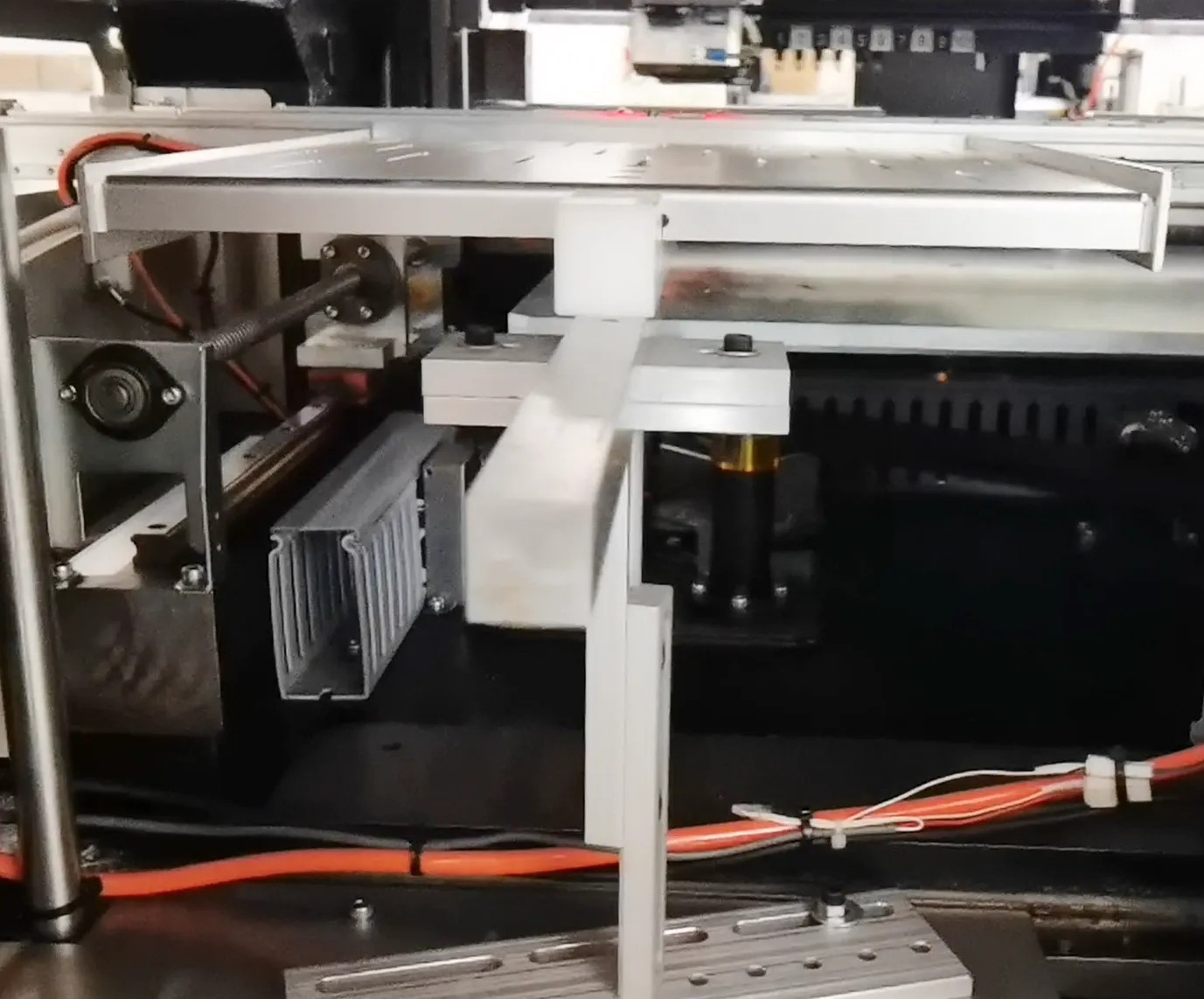
The fixed-tray mechanism inside a Yamaha YSM10 pick-and-place machine. The dying part reaches the board here, on tape, in a tray, or in a tube — and the form it arrives in is part of the decision, not a detail to sort out later.
Before any of the three roads can be sized, you need one number that most teams do not have on the day the notice arrives: how many places this part is used. Search every bill of materials, not just the one for the product you were thinking of. The same part may sit on three boards, in two product families, under different internal part numbers, and in a service kit that nobody has opened in a year. Search the engineering BOMs, the manufacturing BOMs, the approved vendor lists, the spare-parts lists, the open purchase orders, the work in progress, and the finished goods waiting to ship. A last-time buy sized for one product and spent on three is a buy that runs out early, and a buy that runs out early is worse than no buy at all, because it creates the impression that the problem was handled.
Then count what you already hold, honestly. Usable stock is not the number on the inventory screen. It is the stock you can actually place: reels that are complete and within their floor life, trays that are undamaged, parts that have not been exposed to moisture beyond their handling limit, and stock that is not already promised to another build. Stock that is on a reel in the store, stock that is loaded on a feeder, and stock that is on a board already built are three different things, and only the first two can cover future builds. Our guide to incoming component inspection sets out the checks that decide whether received stock is the right part and fit to use; those checks are the gate at receipt, and the stock count for a last-time buy should only include stock that has passed them. A reel that has not been checked is not cover. It is a hope.
Finally, ask the question that decides whether any of the three roads is even available: how long does this product have left? A product with six months of production remaining and a product with six years remaining face the same notice and need opposite answers. The remaining life is not a guess about the market. It is the sales forecast, the service and warranty obligation, the contract end date, and the date the assembly leaves production, taken together. If nobody can state the remaining life, the last-time buy cannot be sized, the alternate cannot be judged against a horizon, and the redesign cannot be costed. That missing number is the first thing to obtain, and it is obtained from the people who own the product, not from the component.
With the notice read and the part’s footprint known, the decision is a comparison of three roads. None of them is free, none of them is fast, and each one fails in a different way. The table below sets them side by side so the comparison is made on the same terms, and the sections that follow price and test each one in turn.
| The road | Best fit | Main exposure | What it needs to be real |
|---|---|---|---|
| Last-time buy | Demand is forecastable, the product’s remaining life is short and known, and the order window is still open. | Cash tied up in stock, forecast error, storage life, and the risk of buying years of a part the product stops needing. | An approved lifetime-demand model and a storage plan, signed off before the window closes. |
| Qualify an alternate | A credible alternate exists, the board can accept it without a layout change, and there is time to qualify it before the stock runs out. | Qualification takes longer than planned, the alternate fails a test late, or the customer does not accept it. | Proof against the board’s own requirements, a first article, and the customer’s approval where one is required. |
| Redesign the board | No credible alternate exists, the part’s package or function is gone, several parts are dying at once, or the product will outlive any stock you could buy. | Engineering time, re-qualification, re-certification where it applies, and a gap while the new board is proven. | A redesign that is scoped, costed and scheduled before the old board’s stock runs out. |
The three roads are not mutually exclusive, and the commonest honest answer is a combination: a last-time buy sized to cover the time the alternate needs to be qualified, or a last-time buy that covers production while the redesign is built. What the combination needs, and what a single-road answer often lacks, is a date on which the bridge ends. A last-time buy that “covers us while we qualify the alternate” without a qualification date is not a bridge. It is a delay, and the delay ends when the stock runs out, whether or not the alternate is ready. Put the date in the decision record, and put the fallback in it too: if the alternate is not approved by that date, the next step is already decided, not debated under pressure.
A last-time buy is not an order. It is a lifecycle investment, and it is sized from the product’s remaining life, not from the size of the order window or from a habit such as “buy a year’s worth.” The sizing method used across the industry is net lifetime demand: add up everything the part still has to do, and subtract everything you already have. In words, the demand is the parts needed for the builds that remain, plus the parts needed for service and spares over the product’s remaining service life, plus a process allowance for the parts lost in production — minus the usable stock you hold and the confirmed supply already on order. Every term in that sum is a decision, not a lookup, and the buy is only as good as the weakest term.
Net lifetime demand, in words. (Remaining builds × parts per board) + service and spares demand + process allowance − usable stock − confirmed open supply. Work each term from your own records: the build plan for the first, the service obligation for the second, your own loss rate for the third, and a checked stock count for the fourth and fifth. If any term is a guess, say so in the record, and say how big the guess is.
The worked example below shows the arithmetic on invented numbers, with the assumptions stated next to it. A “part” here is simply one piece of the component; no money figures are used, because the buy is a quantity decision and the money follows the quantity. Substitute your own numbers and the method still works; the numbers below will not match your product, and they are not meant to.
Assumptions, stated up front. One invented control board, using 2 of the part per board. Remaining production: 3 years at 400 boards a year. Service demand over the remaining service life: 150 parts. Process allowance: 3% of build demand, for parts lost in handling, placement and rework. Usable stock on hand, checked and fit to place: 300 parts. Confirmed supply already on order: 200 parts. All of these figures are assumptions for illustration. None of them is a measurement from any real product.
Build demand: 3 × 400 × 2 = 2,400 parts. Service demand: 150 parts. Process allowance: 3% of 2,400 = 72 parts. Gross lifetime demand: 2,400 + 150 + 72 = 2,622 parts. Less usable stock (300) and confirmed open supply (200): net lifetime demand = 2,622 − 500 = 2,122 parts. That is the size of the last-time buy, on these assumptions — and it is a number that moves the moment any assumption moves.
Three things about that number deserve attention, because each one is a mistake made in real buys. First, the service demand is the term most often left out, and it is the term that bites last: a buy that covers production and forgets service leaves a product that can be built but not repaired, and the service obligation usually outlives production by years. Second, the process allowance is not padding. It is the parts your own line loses, and it has to come from your own records, not from a percentage borrowed from another line. Third, the buy has no safety in it unless you put safety in it deliberately and label it: a round-up, a stated reserve, or a stated risk acceptance. A buy that is quietly rounded up by a fifth is not a sized buy. It is a guess wearing the shape of a calculation, and nobody can audit it later.
Then there is the storage. A last-time buy that covers three years of production is three years of stock, and stock ages. Moisture-sensitive parts have a floor life and a handling regime that does not pause because the parts are “in storage”; solderability degrades over time; reels and trays need controlled conditions and periodic inspection, with traceable withdrawals and a way of watching the attributes that age. The handling of moisture-sensitive parts on the factory floor is a subject of its own — it is covered in a companion piece on moisture-sensitive components, and this article does not rewrite it — but the decision here has to include the storage plan, because a buy whose parts cannot be placed in year three is not cover for year three. It is a write-off with a three-year delay. And the buy has to be re-run when the inputs change: if the forecast falls, the buy is already too big and cannot be un-bought; if the forecast rises, the buy is too small and the window has closed. That asymmetry is the reason the demand model is signed off before the order is placed, and the reason a buy is never sized from a single number of months of stock.
The most dangerous sentence in this whole subject is “the datasheets match.” A datasheet is the starting point for the requirement, not the proof that the requirement is met. The old part’s datasheet does not contain every requirement the product imposes on it: the circuit it sits in, the assembly process it goes through, the firmware that talks to it, the environment it works in, and the qualification basis the product was approved under. A cross-reference from a distributor or a search result is not an approved replacement. It is a candidate, and the candidate has to satisfy the requirements of the actual circuit, the actual assembly process, and the actual operating environment before it can be approved.
The proof is built from the board’s own requirements, in this order. Electrically, the alternate has to meet the values the circuit actually uses, across the full operating range, not just at the headline conditions on the front page of its datasheet. That includes the behaviour the old part showed that the datasheet never promised: the tolerance the circuit was designed around, the temperature behaviour, the behaviour under load, and any characteristic the original design relied on without writing it down. Mechanically, the package, the footprint, the height, and the pinout have to fit the board as it is — and “fits” means the board does not change, because a footprint change is a redesign, not a substitution. In process, the alternate has to survive the same assembly: the same soldering profile, the same cleaning, the same handling, and the same moisture sensitivity rating as the part it replaces, or the process has to be re-qualified around it. In firmware, where the part is programmable or communicates, the alternate has to answer the same commands in the same way, or the firmware has to change — and a firmware change is a qualification event of its own. In compliance, the alternate has to meet the same material and regulatory requirements as the part it replaces, and its own lifecycle has to be checked too: an alternate that is itself near end of life only buys a shorter version of the same problem.
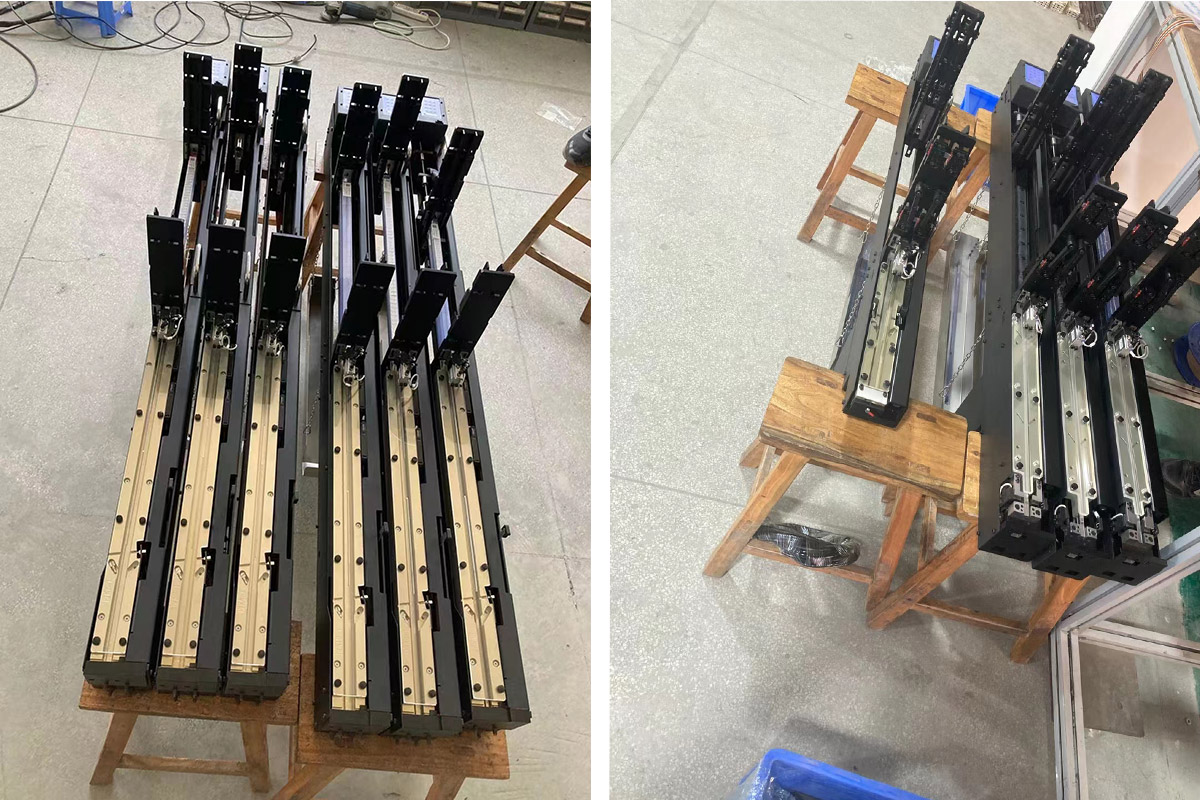
Tube-feeder units in a workshop. An alternate part can arrive in a different package format — tape, tray or tube — and the feeder has to match the format, or the part cannot be placed at all.
The package format deserves its own line, because it is the requirement most often discovered late. An alternate that is electrically identical but arrives in a tube where the old part arrived on tape, or in a tray where the old part arrived in a tube, cannot be placed until the feeding changes with it. The feeder has to match the format, the placement program has to know where to pick the part from, and the first article has to prove the pick works. That is a practical check, not a datasheet check, and it is cheapest when it is done before the alternate is approved, not after the first reel — or tube — arrives on the line. The feeder and vision system on a placement machine can confirm that a part is present, in the right orientation and of the right shape as it is picked. They cannot confirm that the part is electrically equivalent to the one it replaces, or that its datasheet matches the old one: that proof belongs to engineering, and no machine on the line can do it for you.
Then the approval itself. Whether the customer has to approve the alternate depends on the contract and the product, and the answer has to be read from the contract, not assumed from habit. Where the customer’s approval is required, the alternate is not approved until the customer says so, and the evidence the customer needs is the same evidence built above, in a form they can audit. Where the product was qualified or certified with the old part, the change may need the qualification or certification to be revisited, and that has to be known before the switch, not discovered when the next audit asks why the board changed. And the alternate, once approved, still has to pass the gate before a batch starts: the first-article inspection that releases a batch for production applies to the new part exactly as it applied to the old one. The Spanish-language guide to first-article inspection on this site, Inspección de primera pieza en SMT, sets out what that gate checks before a series is authorised; this article does not rewrite its checks, but the boundary is worth stating plainly — an approved alternate is not a released batch, and the first board built with it still has to pass first article.
One more boundary, because the two decisions look alike and are not. Approving an alternate as a planned lifecycle change is a different job from approving one in the middle of a batch, when the reel has run out and the line is waiting. Our guide to mid-batch substitution works through that emergency: the approval steps, the evidence, and when the right answer is to stop the line. This article does not repeat its steps. The planned decision has one advantage the emergency does not — time — and its purpose is to use that time to build the proof properly, instead of spending it on a last-time buy and discovering, when the stock runs out, that the alternate was never qualified.
Redesign is the road nobody wants, because it is the most work. It is also, in some cases, the only honest one, and the discipline is in recognising those cases before the stock runs out. The triggers are straightforward, and any one of them is enough to put redesign on the table. There is no credible alternate: the part’s function, package or performance has no equivalent that can be proven against the board’s requirements, and the search has been done, not assumed. The package is gone: the part is available in a different package that the board cannot accept, and a footprint change is a redesign by another name. Several parts are dying at once: the board’s bill of materials has more than one end-of-life notice in it, and qualifying an alternate for each one costs more, in time and in risk, than redesigning once around parts that are still in production. The product will outlive any stock you could buy: the remaining life is longer than the storage life of the part, longer than the forecast can be trusted, or longer than the cash the buy would tie up can be justified. Or the qualification itself is the problem: the product was certified with the old part, the change would need re-certification, and the re-certification is the same work whether you change one part or redesign the board — in which case the redesign, done properly, is the better use of the same effort.
The cost comparison that decides it is not the cost of the redesign against the cost of the buy. It is the cost of the redesign against the cost of the buy plus the cost of the next end-of-life event, because a last-time buy does not remove the risk, it postpones it. A buy that covers three years of production ends in three years with the same decision, the same qualification, and the same redesign — except that by then the board is older, the knowledge of it is thinner, and the people who designed it may have moved on. A redesign done now, while the board is still in production and the design is still understood, is cheaper than the same redesign done later under a deadline, and it is the only road that actually closes the problem. That is not an argument for redesigning every time. It is an argument for costing the redesign honestly, against the full cost of the buy, and for deciding while both roads are still open.
There is also a case where redesign is the honest answer for a different reason: the part is dying, and so is the product’s market. A last-time buy sized for a product whose demand is falling is a bet on a forecast that is already moving the wrong way, and the stock at the end of the product’s life is cash that will never come back. If the product’s remaining life is genuinely short and genuinely uncertain, the smallest honest answer may be a small last-time buy that covers the firm orders, with the alternate or the redesign left undecided until the demand is known — and the decision record should say exactly that, with the date on which the question will be asked again. What it should never say is that the problem is solved, because a bridge with no far side is not a solution. It is a postponement, and postponements have to be labelled as such, or the next person to read the record will mistake one for a plan.
A decision that is not written down is a decision that will be re-argued, and a last-time buy is the kind of decision that gets re-argued at the worst moment: when the stock runs out, or when it does not. The record needs eight fields, and none of them is optional. The notice itself: its number, its date, the exact part numbers it covers, the last-order date, the last-ship date, and the recommended replacement. The footprint: every product, variant and service kit the part appears on. The remaining life: the production and service horizon the decision is built on, and who stated it. The demand model: the build demand, the service demand, the process allowance, the usable stock and the open supply, each with its source, so the buy in Section 4 can be re-run and checked. The road chosen, and the road not chosen, with the reason. The fallback: what happens if the alternate is not approved by the stated date, or if the demand moves. The storage plan: where the stock will sit, how it will be handled, and how it will be inspected over its life. And the revisit date: the date on which the decision will be looked at again, before the stock runs out and before the window closes.
The record is signed by the people who own the parts of it: engineering for the alternate’s proof and the redesign’s scope, quality for the acceptance standard and the first-article gate, purchasing for the order and the window, and the product owner for the remaining life. A record signed by purchasing alone is a purchase, not a decision, and it will not survive the first question from a customer or an auditor. The revisit date matters most of all, because the decision is made on a forecast, and forecasts move. A last-time buy that is never revisited is a buy that is never corrected, and the correction, when it finally comes, is always more expensive than an early one. Put the revisit in the calendar on the day the decision is made, not when somebody remembers to.
It is worth stating plainly, because the question is asked on every line that faces this decision: no placement machine checks whether a part is end-of-life, and no placement machine checks whether an alternate part’s datasheet matches the old one. That is not a failing of the machine. It is not the machine’s job. What the machine does, and what it is good at, is the physical check at the moment of placement: the feeder presents the part, the vision system confirms it is there, in the right orientation, and of the right shape, and the head places it where the program says it goes. If the alternate arrives in a different package format, the feeder and the program have to be set up for that format, and the first article has to prove the pick and the place work. That is the machine’s part in this decision, and it is a real one — but it is the last check in the chain, not the first, and it cannot stand in for the engineering proof in Section 5.
The same boundary applies at receipt. Our guide to incoming component inspection sets out the checks that decide whether the parts that arrive are the parts that were ordered, in the condition they were ordered in: the reel labels, the moisture indicators, and the checks that catch the wrong part before it reaches the feeder. Those checks matter more, not less, when the parts in question are the last of their kind: a last-time buy is bought once, and a wrong reel discovered after the window has closed cannot be replaced. The inspection at receipt is the gate, the first article is the gate before the batch, and the placement machine’s vision check is the gate at the head. Three gates, three different questions, and none of them can answer the others’ question.
Where JHIMS equipment fits into this article is exactly at those gates. The Yamaha YSM10 pick-and-place machine, for example, is the machine in the photograph in Section 1: its feeder bank and fixed-tray mechanism present the part, and its vision system checks the part as it is picked. The YSM10 product page sets out the machine and its feeding options. The YSM20R is the larger machine on the same principle, for lines running more feeders and larger boards. Neither machine, and no machine JHIMS sells, checks a part’s lifecycle status or compares two datasheets. If a supplier tells you otherwise, ask them to show you where the machine does it. And JHIMS does not sell the components themselves: the part is bought from its manufacturer or an authorised distributor, and the alternate is qualified by the engineers who own the board. The equipment’s job is to place whatever part has been approved, correctly, and to prove that it did.
Treating a cross-reference as an approval. A distributor’s cross-reference, a search result, or the manufacturer’s own recommended replacement is a candidate. Until it has been proven against the board’s requirements and approved by whoever has to approve it, it is not a replacement. Boards have been built on cross-references that were wrong in one parameter the circuit relied on, and the failure was found at functional test, or by the customer.
Buying for the next quarter. A last-time buy sized to the next order, or to “a year’s worth” with no end date attached, is not a lifecycle decision. It is a purchase, and it will need to be made again, after the window has closed, at whatever price and from whatever source is left. Size the buy from the product’s remaining life, as in Section 4, or do not call it a last-time buy.
Forgetting the service demand. Production ends, service continues, and the parts that cover the last three years of production do not cover the five years of spares that follow. A product that can be built but not repaired is a product whose warranty obligation cannot be met, and the cost of that discovery is measured in replacements, not in parts.
Stockpiling without a storage plan. Parts bought for years of cover need years of storage, and storage is not a shelf. Moisture, solderability, handling damage and traceability all have to be planned, inspected and recorded, or the stock will not be placeable when it is needed. A buy whose parts cannot be placed is not cover. It is a write-off with a delay.
Waiting until the window closes. The order window is the only part of this decision that cannot be extended. Qualification takes longer than planned, customers take longer to approve than planned, and redesigns take longer than planned. The time to start is the day the notice arrives, and the time to have the fallback decided is before the window closes, not after. A decision made under a closed window is not a decision. It is a scramble, and scrambles are where cross-references get treated as approvals.
Assuming the recommended replacement is drop-in. The manufacturer recommends a replacement because it believes the replacement is close. Close is not identical, and the differences — a pin that moved, a tolerance that narrowed, a package that changed, a command that answers differently — are found by the proof in Section 5, not by the recommendation. The recommendation saves the search. It does not save the qualification.
How long does a last-time buy have to last?
As long as the product has left. There is no standard number of months, because the buy has to cover the remaining builds plus the service obligation, minus the stock already held. A buy sized as “twelve months of stock” with no end date is not a plan; it is a purchase, and it will run out on a date nobody chose. Size it from net lifetime demand, as in Section 4, and write the horizon it covers into the decision record.
Is the manufacturer’s recommended replacement automatically approved?
No. The recommendation is a starting point for your own qualification, not an approval. The alternate has to prove, against your board’s own requirements — electrical, mechanical, process, firmware and compliance — that it works, and it has to be accepted by whoever has to accept it, which may include the customer. A cross-reference is a search result, not an approved replacement.
Can we buy the part from a broker after the window closes?
Once production has ended and the order window has closed, remaining stock can only come from sources other than the manufacturer, and that changes the risk. The parts have to be checked at receipt with particular care, because the chain of custody is no longer the manufacturer’s, and the inspection in our incoming inspection guide is the gate that decides whether the stock is fit to place. This article does not prescribe a sourcing method for that case, because the right answer depends on the part, the quantity, and the customer’s rules — and it is a decision to make before the window closes, not after.
Does an approved alternate need a first article?
Yes. Approval of the alternate and release of a batch are two different gates. The first board built with the new part still has to pass first-article inspection before the series is authorised, exactly as the old part did. The checks that gate performs are set out in the first-article inspection guide on this site; the alternate does not skip them because it was approved.
What if two parts go end-of-life at once?
Then the question is no longer about either part alone. Qualify an alternate for each, or redesign once around parts that are still in production — and cost the two against each other honestly, including the time each one takes. Two dying parts on one board is one of the triggers in Section 6, and it is the case where a redesign stops being the expensive road and starts being the cheap one.
Bottom line: Read the notice on the day it arrives, find everywhere the part lives, and decide while the window is still open. Size a last-time buy from the product’s remaining life, not from a number of months. Make an alternate prove itself against your board’s own requirements, and do not confuse a cross-reference with an approval. And when the product will outlive any stock you could buy, or no credible alternate exists, say so plainly and redesign — because stockpiling a dying part only moves the same decision a few years down the line, to a day when the board is older, the knowledge is thinner, and the window is already closed.
Talk to JHIMS about your line. If the decision in this article points at your placement and inspection gates — feeding a new part format, proving the first article, or checking what your line can and cannot verify — write to [email protected] and tell us the machine, the board and the part format. We will tell you what the equipment can do, what it cannot, and what to check before you decide.


 Teams
 whatsapp
 telegram
