
News
Direct answer: When a GOB-coated module fails after the screen is installed, do not start with the coating. Most faults that appear in service belong to the cabinet, the installation, or the power and data path — not to the layer on the module face. Work in this order: record the fault exactly as it stands, prove whether it follows the module or stays with its cabinet position, check the cabinet and the installation, and only then ask what the coating record can and cannot prove. Nothing on site should be recoated, opened, or re-torqued on a guess. A fault that cannot be attributed on site is a module to swap or return — not a coating to repair in front of the customer.
This guide starts where the factory guides end: the screen passed handover, it has been running in service, and now something is wrong. One module — or one area of the screen — shows a fault that was not there at acceptance.
That starting point matters, because the factory checks have already had their chance. The bare module was inspected before coating, the batch was accepted after coating, the module was cured and released, and the screen passed its power-on test. If a fault appears now, the question is no longer "was the module good when it left the factory?" It is "what changed since, and where does the fault live now?"
To keep this guide short, it does not repeat the procedures that already exist. The pre-coating inspection of the bare module is where a fault sealed under the coating should have been caught. The curing, handling and storage rules after coating are where a module damaged before installation should have been stopped. The repair-or-scrap decision for a coated module is where the factory decides whether an opened coating can be resealed. And the thermal comparison of coated and uncoated modules is where a heat question is answered by measurement, not by argument. Each is linked here so this guide can use their results without re-writing them.
This guide has one job: attribute a fault that appeared in service, with evidence, before anyone touches the screen.
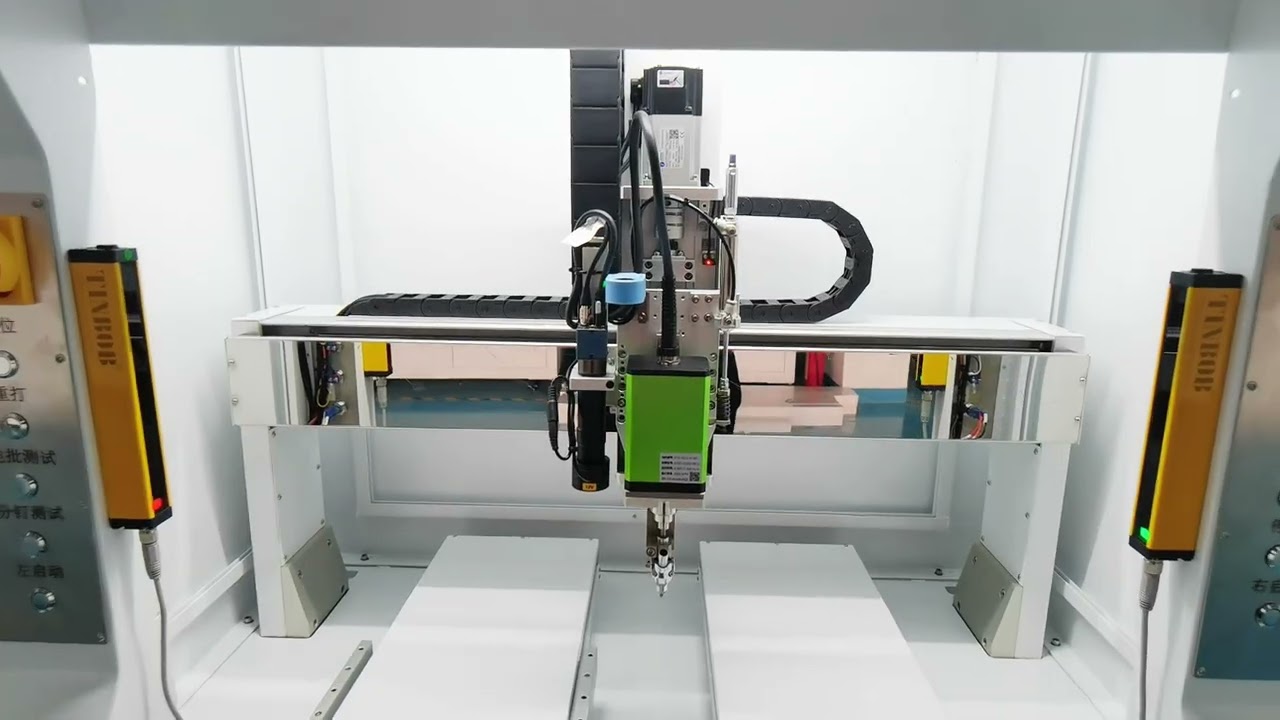
A screw fastening machine at work on LED display assembly (still from the official @jhims video on LED display screw fastening machines). The fastening step is one of the places a field fault can come from — which is why it is checked, not assumed. This is a video still, not a photograph of the faulty screen in this guide.
The most common mistake at a faulty installed screen is also the fastest: someone opens the cabinet, reseats a connector, tightens a screw, or swaps a module — and the evidence of what was wrong disappears with the fix. If the fault returns, or the customer asks who pays, there is nothing left to argue from.
Before anything is touched, record these eight fields. They take a few minutes and they are the whole basis of the attribution that follows.
| Record this | Why it matters later |
|---|---|
| Which module, which cabinet position | Without a position, the fault cannot be separated from the cabinet that holds it. |
| What the fault looks like, in a photograph of the powered screen | A description written after the fix is not evidence; a photograph taken before it is. |
| When it first appeared, and what changed just before | A fault that follows a storm, a hot day, a knock, or a power event points in a different direction than one that appeared for no visible reason. |
| Whether it is one module, one area, or the whole screen | A single-module fault and a whole-screen fault have different owners; the scope is the first filter. |
| The module's batch and coating record, if it can be found | Coating material, program, and cure record — or the fact that the record cannot be found, written down as a gap rather than assumed. |
| The cabinet's own state: ventilation, sun, seals, fans | A cabinet fault argued as a coating fault starts here, with no record of the cabinet at all. |
| What has already been touched, and by whom | Every earlier touch is a suspect. An unrecorded earlier touch is a suspect that cannot be cleared. |
| The customer's acceptance standard for this screen | "Fixed" has to mean something agreed — the same electrical, optical, and appearance standard the screen was accepted against. |
If the batch record cannot be found, write that down and continue. A missing record is itself a finding: it means the coating question in Section 4 cannot be answered from evidence, and the decision in Section 7 has to be made without it. It does not mean the coating is guilty by default.
A fault on an installed screen has four possible owners: the coating, the cabinet, the installation, or the power and data path. The order below is deliberate. It checks the cheapest and most reversible suspects first, and it keeps the coating — the one that cannot be inspected or repaired on site — until last.
The table uses screen-level observations, not pixel-level patterns. The pixel-level diagnosis that decides whether a coating may be opened at all belongs to the rework guide, and it is linked, not repeated, in Section 7.
| What is observed in service | Check first | What it rules out |
|---|---|---|
| Whole module dark, or a whole cabinet section out | Power and data to that position: supply, cable, connector, receiving card | A power or data fault can take out a whole module at once; coating cannot. |
| Fault stays in one cabinet position after a module swap | The cabinet position itself — its connector, its power feed, its seating | The module is cleared; the cause lives in the cabinet. The swap test itself is described in the rework guide. |
| Fault follows the module to a new position | The module — and then, separately, its coating record (Section 4) | The cabinet is cleared; the cause travels with the module. |
| Fault appeared after rain, washing, or a humid spell | Cabinet seals, drainage, and cable entries — before the coating | Water that entered through a seal is a cabinet failure, even if the first symptom shows on a module. |
| Fault appeared after a hot day, or in the sunniest position | Cabinet air, ventilation, and sun exposure, per the thermal guide's cabinet check | A module that fails only in a hot, sealed cabinet has failed its installation, not its coating. |
| Fault appeared after a knock, a move, or a service visit | Mechanical seating: module flatness, seam, screw seating, connector seating | A disturbed module points at the installation step that was just disturbed. |
| Visible change on the coating itself — edge lifting, discoloration, new bubbles | The coating record and the material datasheet (Section 4) | Only a visible coating change, matched against the record, makes coating the leading suspect. |
Two cautions apply to the whole table. First, a symptom points at a suspect; it does not convict one. A module that is dark after rain may still have a power fault that rain merely exposed. Second, do not run the checks in a different order because one looks easier. Checking the coating first — by touching, pressing, or opening it — destroys the evidence the other checks need.
By the time the coating becomes the suspect, three things should already be true: the fault follows the module, the cabinet and power checks have cleared the position, and there is a visible coating change or a reason to suspect one. If any of those is missing, coating is not yet the leading suspect, and this section is a check to run — not a verdict to announce.
The coating itself cannot be interrogated on site. It cannot be peeled back for a look, and it cannot be tested without damaging it. What can be interrogated is the record of how it was made.
Ask the record four questions. First, what material was used, and what does its own datasheet say? The material used as the worked example in this series, OPT315 potting and sealing material, is a two-component condensation-type silicone that cures at room temperature, is mixed at a general weight ratio of A:B = 10:1, and — importantly for a field question — is one the datasheet says should generally not be heat-cured, because heating can produce pinholes or bubbles. Second, was the batch fully cured before the module was screwed into a cabinet? The curing guide's three states — wet, surface dry, and fully cured per the datasheet — are the test here: a module installed while only surface dry can carry edge marks or dents that show up later as a coating fault. Third, does the record show the mix, the cure start time, and the shop conditions — or is there a gap exactly where the answer should be? Fourth, does the module's coating match the batch the record describes, or could this module have come from a different batch, a different program, or a repair?
One honesty note belongs here. The machine page for the GOB-LXS330 glue dispensing machine describes the coating layer as a transparent epoxy resin, while the OPT315 material page describes a silicone sealing material. Those are two different chemistries, and a guide that picked one as "the" GOB material would be guessing. Take the chemistry from the module's own production record and the material datasheet named on it — never from a general article, and never from a product page written about a different material.
What the record can prove is limited, and the limit should be stated plainly. A complete record with the right material, the right mix, and a signed cure release makes a coating cause less likely — it does not prove the coating is perfect. An incomplete record proves nothing about the coating at all; it proves the factory cannot answer the question. And a visible defect in the layer — an edge that has lifted, a patch that has discoloured, bubbles that were not there at acceptance — is the only on-site observation that moves coating to the front of the queue, and even then the next step is the decision in Section 7, not a repair on site.
The cabinet and the installation are checked together because they fail together: a cabinet that cannot breathe makes its modules run hot, and a module that was forced into a cabinet will show it at the seam.
For the cabinet, the checks are the ones in the thermal guide's cabinet section: whether ventilation openings are open and unobstructed in the as-installed arrangement, whether any fan or forced-air path the design relies on is actually running, whether modules at the top, the edges, and the centre see the same air, and whether direct sun or a nearby heat source changes the cabinet's air temperature from the room temperature. Add two checks that belong to the field rather than the factory: whether the cabinet seals and cable entries are intact after weather, and whether water has a path out if it gets in. A screen that passes in open air on a bench and fails in a sealed, sunlit cabinet has not failed its coating; it has failed its installation.
For the installation, check seating before torque. A module that does not sit flat, a seam that steps against its neighbour, or a connector that seats only when pressed are installation findings, and they are found by looking — not by tightening. Only after seating is confirmed does the screw record matter: whether the screws were driven to a recorded torque, whether any screw was reported as slipping or cross-threading, and whether the depth detection on the fastening machine confirmed seating. The ZM320 desktop screw fastening machine used for this step logs torque, turns, and NG status per screw position and verifies seating with a built-in depth sensor — that log is the evidence that the screws were right, and its absence is the evidence that they were never proven.
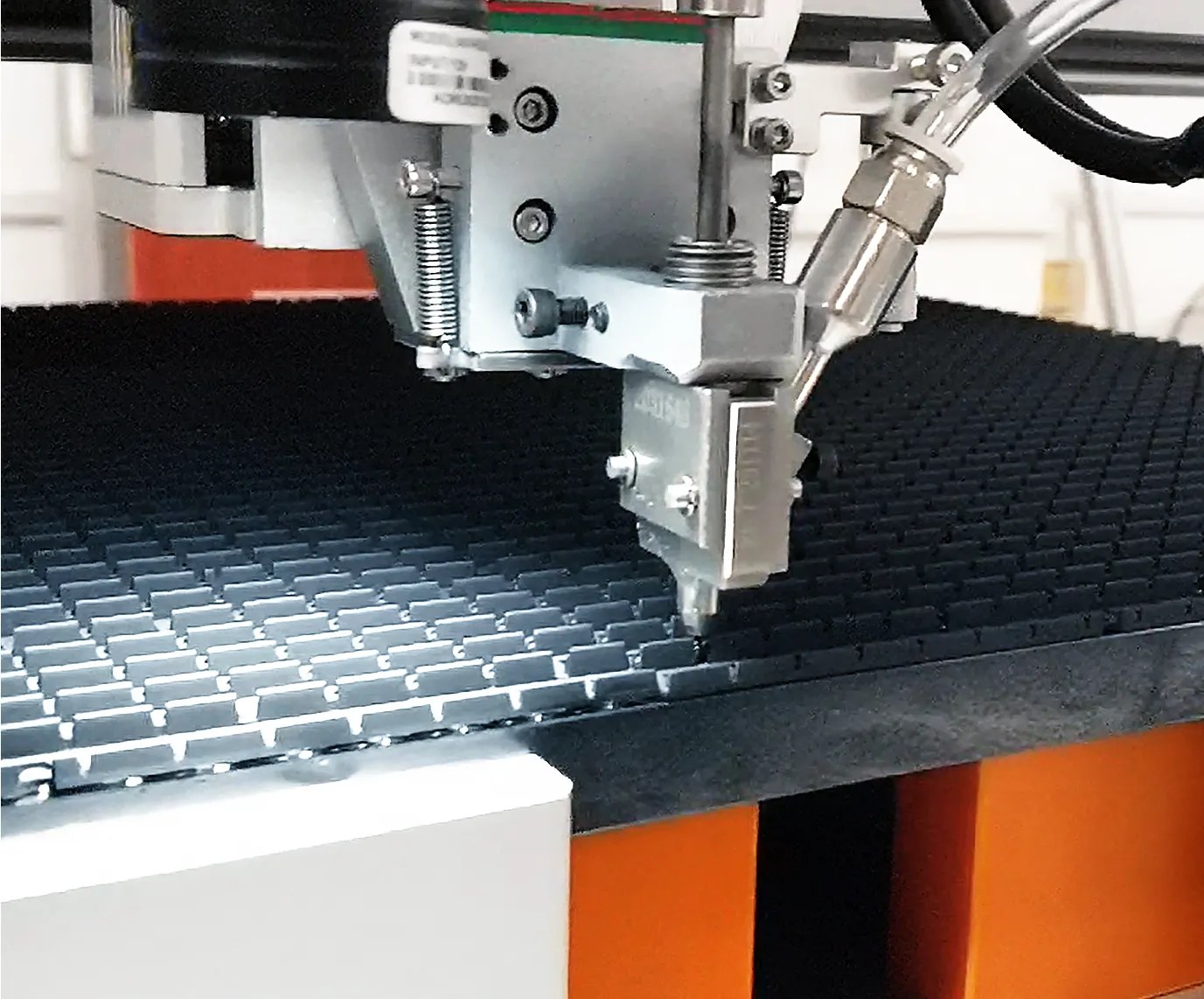
The screwdriver bit at the point of engagement. A screw that looks seated can still be wrong — the torque record and the depth check are what prove it, not the appearance. Photo: ZM500 screw fastening machine gallery, JHIMS commercial site.
If the screw record is missing, do not re-torque the cabinet to "make sure". Re-torquing without a baseline changes the evidence, risks stripping a thread or cracking a board, and leaves the question unanswered in a worse state than before. Record the missing log as a gap and move to the decision in Section 7.
Five actions are prohibited on an installed screen, whatever the pressure from the customer or the schedule. Each one destroys evidence, creates a new fault, or turns a module problem into a screen problem.
Do not recoat the faulty area. A hand-applied patch cannot match the surrounding coating in coverage, edge definition, or appearance, and it seals the original fault underneath a new layer. Recoating also voids the one question that matters — what caused the fault — by covering the evidence.
Do not open the coating. Opening a coated module is a factory operation with gates: a confirmed localised fault, a known chemistry, a method proven on scrap, matching reseal material, and a full retest. None of those can be met on site, in front of a customer, under time pressure. The rework guide's field note says the same thing from the other side: for an installed module, the balance shifts further toward replacement.
Do not heat the module to "reseat" the coating. Heat applied to hurry a cure or to reseat a lifted edge is the shortcut the material datasheet warns against — for the worked-example material, heating to cure is generally not recommended because it can produce pinholes or bubbles. A coating that has lifted has a cause; heat hides the cause and adds a defect.
Do not re-torque screws without a record. As Section 5 says, a screw changed without a baseline torque is a screw whose state is now unknown. If a screw must be checked, record its position, its condition before the check, and the result — and if the fastening machine's log exists, read it first.
Do not clean the coated face with an unapproved method. A coated face is not a glass window. Solvents, abrasives, and pressure washers can damage the layer or drive contamination into an edge. Any cleaning on site needs the method the module supplier approved for that coating — not a method chosen because it is at hand.
Attribution ends in one of four outcomes. The table below is the decision; the evidence pack underneath it is what makes the decision defensible when the customer, the supplier, or the factory asks for it later.
| Outcome | When it applies | What happens next |
|---|---|---|
| Fix on site | The cause is outside the module and reversible on site: a connector, a cable, a fan, a blocked vent, a seal | Fix it, record what was changed, re-test the screen, and keep the record with the screen — not in a phone message |
| Swap a same-batch spare module | The fault follows the module, and a spare from the same production batch is available | Swap, record both modules' identities and positions, and re-test; the faulty module goes back to the factory with its record, not into a drawer |
| Return the module to the factory | The fault follows the module and no same-batch spare exists, or the coating is the leading suspect | The factory decides repair or scrap under the rework guide's five gates; the site does not open the coating to "help" |
| Escalate with an evidence pack | The cause cannot be attributed on site, the record is missing, or the fault affects more than one module | Send the evidence pack below to the supplier and stop; do not keep changing parts hoping the fault goes away |
The evidence pack is short: the eight fields from Section 2, the swap result (which way the fault moved), the cabinet and installation checks with their results, the coating record or the written note that it is missing, and photographs of the fault before anything was touched. A pack with a gap is still a pack — the gap is written in it, not hidden. What must not be sent is a conclusion the evidence does not support: "the coating failed" is not a conclusion from a missing record, and "the cabinet is fine" is not a conclusion from a check that was never run.
One rule governs the whole decision. A fault that cannot be attributed on site is not a fault to keep working on site. Each further change without a record makes the eventual attribution harder and the eventual bill larger.
A diagnosis is only as good as the process it questions, and the process here is the coating step and the fastening step. The GOB-LXS330 glue dispensing machine applies the coating with a running accuracy of ±0.05 mm, a 400 × 400 mm fixture, teaching programming, parameter storage, a Panasonic PLC with touchscreen control, an anti-drip valve, and a liquid level sensing alarm, with a 30 L glue capacity and an input pressure range of 0.5–0.8 MPa. Those specifications describe the coating step, not the field result: a repeatable coating means the batch record is comparing one consistent process against another, not one uneven coating against a different one.
For the material side, the OPT315 potting and sealing material states a general mix ratio of A:B = 10:1, room-temperature curing, a 22 kg set (A 20 kg + B 2 kg), and 9 months of storage under 25 °C, cool and dry, sealed. Those points are cited for one reason: the field question "was this batch made as specified?" can only be answered against numbers that were written down before the batch started.
For the fastening side, the ZM320 desktop screw fastening machine records torque, turns, and NG status per screw position, with depth detection verifying seating. That record is what turns "the screws were probably fine" into a checkable fact — or into a documented gap, when the record does not exist.
The screen worked at handover. Can the coating still be the cause?
Yes — but "still possible" is not "most likely". A coating fault can appear in service, for example an edge that lifts after temperature swings, or a layer that was installed before it was fully cured. That is why the coating question is asked last, not first: the cabinet, the installation, and the power path are cheaper to check and more often responsible, and they must be cleared before the coating is blamed.
Can I recoat the faulty area on site to get the screen running again?
No. A hand-applied patch cannot match the surrounding coating, it seals the original fault underneath, and it destroys the evidence of what caused the fault. If the module is the problem, the answer is a same-batch spare or a factory return — not a field repair of the layer.
One module is dim. Do I have to replace the whole cabinet?
No. First prove whether the fault follows the module or stays with the position, using the swap test described in the rework guide. If it follows the module, only that module is in question. If it stays with the position, the module is not the problem at all — the cabinet position is.
What if the batch record is missing?
Write that down as a gap and continue with the checks that do not need it — the cabinet, the installation, and the power path. A missing record means the coating question cannot be answered from evidence, so the decision defaults to swap-or-return rather than to a coating verdict. Do not let a missing record become an accusation against the coating, and do not let it be quietly filled in from memory.
Bottom line: A fault after installation is an attribution problem before it is a repair problem. Record it, isolate module against position, check the cabinet and the installation, and only then ask the coating record what it can prove. The cheapest field repair is the one that fixes the right part — and the most expensive is the coating opened, recoated, or re-torqued on a guess.
For the coating machine, the coating material, or the screw fastening record behind this guide, contact JHIMS at [email protected].


 Teams
 whatsapp
 telegram
