


V Cutting and Engraving Machines: Precision Solutions Driving PCB Depaneling and Customization in 2026
As electronic products continue to evolve toward greater miniaturization, higher component density, and increased personalization, PCB depaneling and custom processing have emerged as critical bottlenecks in modern SMT production lines. In 2026, V Cutting and Engraving Machines are gaining significant traction among electronics manufacturers due to their excellent balance of high precision, low mechanical stress, and multi-functional integration. These machines effectively combine mechanical V-Groove cutting with precision engraving capabilities, making them particularly suitable for both high-volume production and small-batch customized orders.
According to recent industry reports, the global PCB Depaneling equipment market is projected to maintain a steady CAGR of approximately 6.24% through 2033. Hybrid V Cutting solutions are especially popular because they offer manufacturers a more cost-effective alternative to pure laser systems while delivering superior performance compared to traditional mechanical methods. This article explores the latest technological advancements, practical applications, and selection criteria for V Cutting and Engraving Machines in the current competitive landscape.
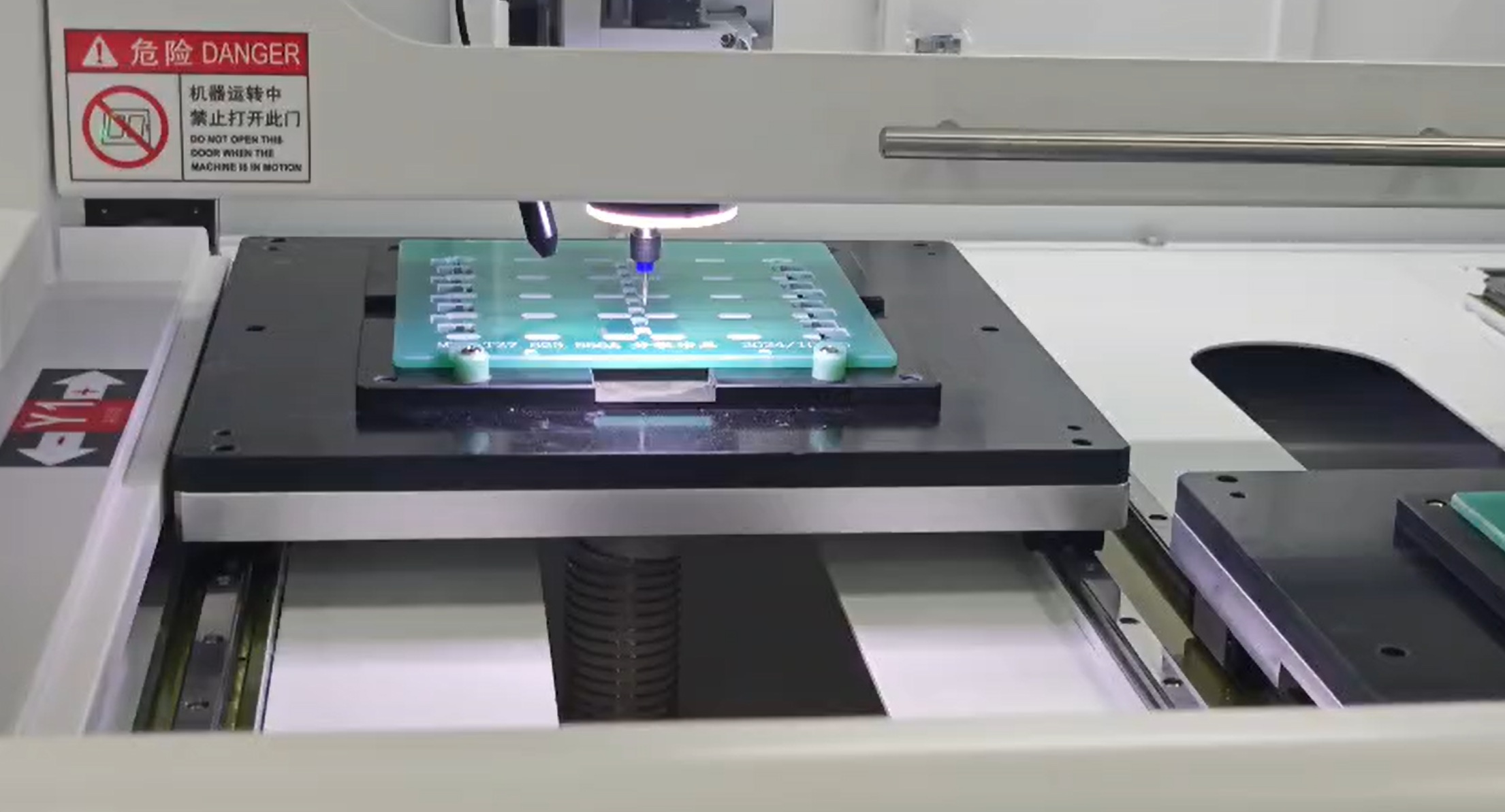
Industry Status and Core Challenges in PCB Depaneling
The electronics manufacturing industry in 2026 faces mounting pressure to improve production efficiency while maintaining the highest quality standards. PCB depaneling — the process of separating individual boards from a larger panel — has become increasingly complex due to advances in board design.
Key challenges include:
- Mechanical stress affecting yield rates: Traditional routing or punching methods often introduce vibration and stress that can damage fine-pitch components, BGAs, and high-density circuits.
- Increased difficulty with flexible and ultra-thin PCBs: The rising adoption of flexible printed circuits in wearable devices and foldable electronics demands gentler separation techniques.
- Low efficiency in high-mix production: Small-batch and customized orders require frequent machine changeovers, significantly reducing overall throughput.
- Balancing cost versus precision: While laser depaneling offers excellent accuracy, its high initial investment and operating costs make it less accessible for many mid-sized manufacturers.
- Traceability and marking requirements: Modern supply chains demand integrated engraving or marking solutions for batch tracking and quality control.
Technological Breakthroughs and Innovative Solutions of V Cutting and Engraving Machines
2026 V Cutting and Engraving Machines represent a mature hybrid approach that combines the strengths of mechanical precision with intelligent control systems. These machines utilize high-precision CNC-controlled blades to create accurate V-Grooves, while integrated engraving heads allow simultaneous or sequential surface marking and customization.
The technology has evolved significantly with improved servo motors, vision alignment systems, and smart depth control, resulting in cleaner edges and reduced particle generation.
Key Technical Parameters Comparison
| Parameter | Traditional Mechanical | Laser Solution | 2026 New Generation V Cutting + Engraving |
|---|---|---|---|
| Accuracy | ±0.1mm | ±0.025mm | ±0.05mm |
| Stress Impact | Medium-High | Very Low | Low |
| Applicable Shapes | Straight lines mainly | Any complex shape | Straight + Precision Engraving |
| Equipment Investment | Low | High | Medium |
| Production Speed | High | Medium | High |
| Maintenance Cost | Low | High | Medium |
Production Efficiency Improvement Analysis
Manufacturers implementing advanced V Cutting and Engraving Machines typically report depaneling efficiency improvements of 35%-55%. Yield rates can increase by 8-15% due to reduced board damage. In LED GOB module production, for example, the combination of precise V-Groove depth control and automated engraving has been shown to cut secondary processing time by nearly 40%.
Cost Control and Maintenance Optimization
- ROI Cycle: Most manufacturers recover their investment within 12-18 months through improved throughput and reduced scrap rates.
- Maintenance Interval: Modern designs with durable carbide tools extend maintenance intervals by over 30% compared to older models.
- Energy Consumption: Hybrid mechanical systems consume approximately 40% less energy than equivalent laser systems during continuous operation.
- Tool Life Management: Intelligent monitoring systems can predict blade wear, minimizing unexpected downtime.
For more technical details on the Cutting and Engraving Series, please visit the JHIMS product center.
Typical Application Scenarios in 2026
V Cutting and Engraving Machines are proving especially valuable across multiple high-growth sectors:
- LED GOB Module Packaging: Precise V-Cut ensures uniform board separation while engraving provides permanent batch and traceability codes.
- Automotive Electronic Control Units (ECUs): Low-stress depaneling is critical for protecting high-reliability components in harsh environment applications.
- Consumer Electronics Flexible Boards: Supports complex contour requirements and personalized design engraving for premium products.
- Medical Device PCBs: Delivers the clean, particle-free separation and identification required for stringent regulatory compliance.
- Industrial Control Systems: Ideal for medium-volume production where both efficiency and customization are required.
Expert FAQ
Q1: What are the main advantages of V Cutting and Engraving Machines compared to laser depaneling in 2026?
In high-volume straight-line applications, V Cutting solutions provide better cost-effectiveness, higher throughput, and lower operating costs while modern control systems deliver low stress performance close to laser standards.
Q2: How do I choose the right V Cutting equipment for my production line?
Important factors include maximum PCB size, thickness range, annual production volume, required precision, and whether engraving functionality is needed. CNC programmable machines with quick tool change systems are highly recommended for flexibility.
Q3: Is V-Cut technology suitable for flexible PCBs?
Yes. New-generation equipment with precise depth and angle control can safely process many flexible materials. However, extremely thin or highly flexible boards should be evaluated case-by-case.
Q4: What is the typical maintenance frequency for these machines?
Routine maintenance is generally recommended every 500-1000 operating hours. Tool replacement cycles usually range from several weeks to several months depending on materials processed.
Q5: What are the primary PCB depaneling trends expected in 2026 and beyond?
Hybrid solutions combining V-Cut, laser, and engraving; AI-powered vision alignment systems; and fully automated low-stress intelligent processing are the clear industry direction.
Q6: How does engraving functionality add value to the depaneling process?
Integrated engraving allows manufacturers to add serial numbers, QR codes, or logos during the depaneling step, improving traceability and reducing the need for separate marking stations.
2026 Outlook and Action Recommendations
Looking ahead to 2026-2030, V Cutting and Engraving Machines will continue to evolve toward greater intelligence, seamless SMT line integration, and enhanced multi-functionality. Manufacturers who adopt these hybrid solutions early are expected to gain significant competitive advantages in both efficiency and production flexibility.
Electronics manufacturers are encouraged to conduct a thorough assessment of their current depaneling processes and identify specific pain points. Investing in modern V Cutting and Engraving technology can deliver rapid returns while future-proofing production capabilities.
Learn more about JHIMS’s latest SMT Cutting and Engraving solutions. Our technical team is ready to provide professional consultation and customized production line recommendations.


 Teams
Teams
 whatsapp
 telegram
