


SMT Pick and Place in 2026: Revolutionizing PCB Assembly
Introduction — The global electronics manufacturing landscape is undergoing its most significant transformation in a decade. Driven by the convergence of electric vehicles, 5G infrastructure, AI computing hardware, and the relentless miniaturization of electronic components, SMT pick and place machines have evolved from simple component-placement tools into intelligent, high-speed manufacturing platforms capable of placing up to 95,000 components per hour with micron-level precision. This article examines the technological breakthroughs, market forces, and real-world applications defining the SMT pick and place industry in 2026.
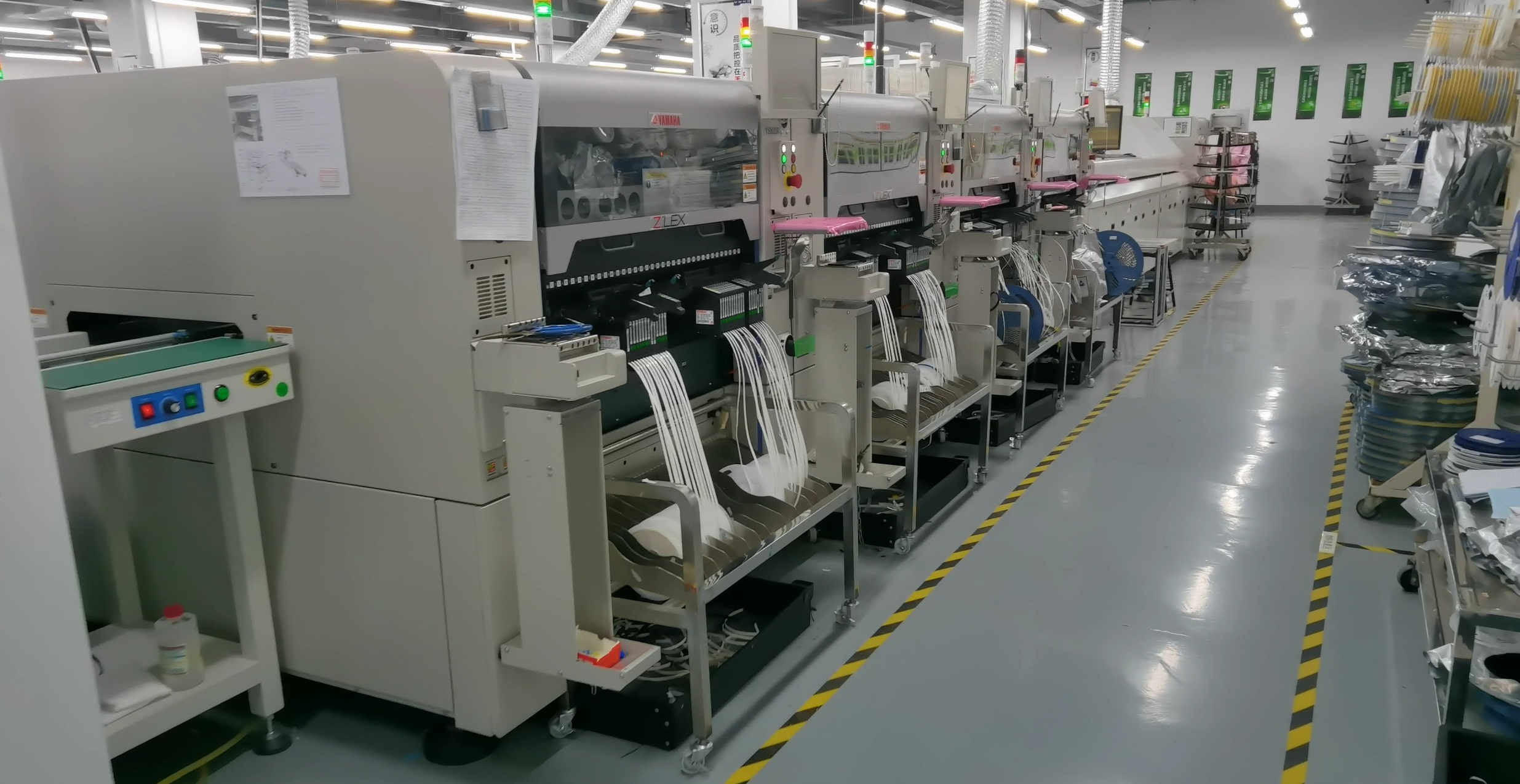
Industry Status and Core Pain Points in 2026
The SMT equipment market surpassed USD 7 billion in 2025 and is forecast to grow at a CAGR of 6.8% through 2030, according to Mordor Intelligence. Despite this growth, electronics manufacturers face unprecedented challenges:
- Component miniaturization pressure: The industry transition from 0402 to 0201 and now 03015 (0.3×0.15mm) components demands placement accuracy of ±35μm or better — a threshold many legacy machines cannot meet consistently.
- Mixed-production complexity: High-mix, low-volume production — the dominant mode for contract manufacturers — requires frequent changeovers that can consume 15–30% of available production time on inflexible platforms.
- Throughput vs. precision trade-off: Achieving 95,000 CPH rated speed is meaningless if placement defects exceed 50ppm. Manufacturers increasingly prioritize real-world CPH (accounting for vision overhead) over rated specifications.
- Skilled labor shortage: A global shortage of SMT technicians and machine operators is driving demand for intelligent, self-calibrating equipment with intuitive interfaces and remote diagnostics.
- Supply chain traceability: Automotive (IATF 16949) and medical (ISO 13485) certifications now require component-level traceability — a capability absent from many legacy pick and place platforms installed before 2020.
SMT Pick and Place Technology Breakthroughs in 2026
The past 24 months have seen several breakthrough innovations reach commercial maturity. Modern SMT pick and place platforms now integrate technologies that were considered experimental just three years ago.
Key Technical Parameter Comparison
| Parameter | Traditional Solution (Pre-2020) | 2026 Next-Generation |
|---|---|---|
| Placement Speed (Rated CPH) | 50,000–65,000 | 90,000–100,000+ |
| Placement Accuracy | ±50μm | ±25–35μm (Cpk ≥ 1.0) |
| Component Range | 0402 – 15mm | 03015 – 55×100mm |
| Vision Processing | Stationary capture | On-the-fly (Vision on the Fly) |
| Feeder Capacity | 80–100 positions | 140+ positions (dual cart) |
| Conveyor Architecture | Single beam, single lane | Dual beam, dual lane (parallel) |
| Calibration | Manual, weekly | Auto-calibration, daily self-check |
Production Efficiency Improvement: Quantitative Analysis
Independent benchmark data from SMT production lines upgraded in 2025–2026 shows consistent gains:
- Throughput increase: 40–65% real-world CPH improvement when upgrading from pre-2020 platforms to 2026-generation dual-beam machines (Yamaha YSM20R, YRM20 class).
- Changeover time reduction: Quick-change feeder carts and digital recipe management reduce changeover from 25 minutes to under 8 minutes — a 68% improvement.
- Placement defect reduction: Advanced vision-on-the-fly systems reduce placement defects from 85ppm to under 20ppm for 0201 and finer components — a 76% improvement.
- Uptime improvement: Predictive maintenance algorithms and remote diagnostics increase machine uptime from 92% to 97.5% on average.
- Cpk stability: Modern machines maintain Cpk ≥ 1.0 over 500,000+ placements without recalibration, compared to 50,000–100,000 placement intervals required on legacy equipment.
Cost Control and Maintenance Optimization
Total Cost of Ownership (TCO) analysis reveals that the purchase price represents only 35–40% of a machine's 5-year cost. The 2026 generation of SMT pick and place machines addresses the remaining 60–65% through several innovations:
- ROI calculation example: A typical mid-volume SMT line upgrading to a 90,000 CPH platform recovers the investment in 14–22 months through labor savings (1 operator vs. 2), yield improvement (0.8% → 0.3% defect rate), and throughput gains (18 boards/hour → 30 boards/hour).
- Maintenance cycle extension: Improved nozzle materials (ceramic-composite) and self-cleaning vacuum systems extend maintenance intervals from 500 hours to 2,000+ hours, reducing annual maintenance costs by an estimated 35%.
- Energy efficiency: 2026 platforms consume 18–22% less power per placed component through regenerative servo drives and optimized motion profiles, saving USD 1,200–2,500 per machine annually at industrial electricity rates.
More technical details on SMT Pick Place series solutions are available in our product technical documentation.
Typical Application Scenarios: 2026 Real-World Perspective
The following application scenarios illustrate how different industry sectors are leveraging 2026-generation SMT pick and place technology:
- New Energy Vehicle (NEV) electronics: A Tier-1 automotive supplier in Shenzhen upgraded their ADAS module production line with dual-beam Yamaha YSM20R machines. The ability to place 0201 passive components alongside large QFP and BGA packages on the same machine — without head changes — reduced their line footprint by 30% while increasing throughput by 52%.
- 5G telecommunications infrastructure: 5G base station PCBs require placement of RF shielding cans, fine-pitch BGAs, and 0201 passives on the same board. The latest generation of placement machines with on-the-fly vision achieve the ±35μm accuracy required for 0.3mm-pitch BGAs while maintaining 70,000+ real CPH.
- Mini LED display manufacturing: Mini LED modules require placing thousands of LED die per panel with strict luminance matching. High-speed chip-shooter configurations (Yamaha YSM40R class) achieve the required throughput while maintaining the ±50μm accuracy needed for proper solder joint formation.
- Consumer electronics (wearables): Smartwatch and earbud PCBs are increasingly adopting 03015 components to save board space. Manufacturers report that machines without ±35μm repeatability experience unacceptably high rework rates on 03015 placements — making 2026-era precision specifications a necessity, not a luxury.
- Industrial IoT and smart home: High-mix, low-volume production of IoT gateway boards, sensor modules, and smart home controllers demands flexible feeder configurations. Machines with 140+ feeder positions and quick-change carts minimize changeover downtime in these environments.
Expert FAQ: SMT Pick and Place in 2026
2026 Future Outlook and Action Recommendations
The SMT pick and place industry in 2026 stands at an inflection point. The convergence of five trends will define the next five years:
- AI-driven placement optimization: Machine learning algorithms that predict optimal component pickup points, optimize placement order, and self-calibrate based on observed placement accuracy are moving from research labs to production floors.
- Digital twin integration: Leading manufacturers now offer digital twin simulations that predict real-world CPH based on actual bill-of-materials data — eliminating the guesswork in machine selection.
- Collaborative SMT lines: The boundary between SMT equipment and material handling is blurring. Automated material delivery, intelligent feeder management, and seamless MES integration are becoming standard expectations.
- Sustainability pressure: Energy-efficient designs, reduced compressed air consumption, and longer service intervals are becoming competitive differentiators as manufacturers face tightening ESG reporting requirements.
- Regional supply chain diversification: The concentration of SMT equipment manufacturing in East Asia is driving interest in localized service, training, and spare parts networks — creating opportunities for regional distributors with strong technical capabilities.
For manufacturing leaders evaluating SMT pick and place investments in 2026, the recommendation is clear: prioritize platforms that combine proven high-speed performance with genuine flexibility for mixed-production environments. The ability to handle both today's high-volume automotive boards and tomorrow's prototype IoT modules on the same machine is the defining competitive advantage.
Learn how JHIMS can support your SMT production line upgrade — explore our SMT Pick Place solutions and speak with our technical team about your specific production requirements.


 Teams
Teams
 whatsapp
 telegram
